
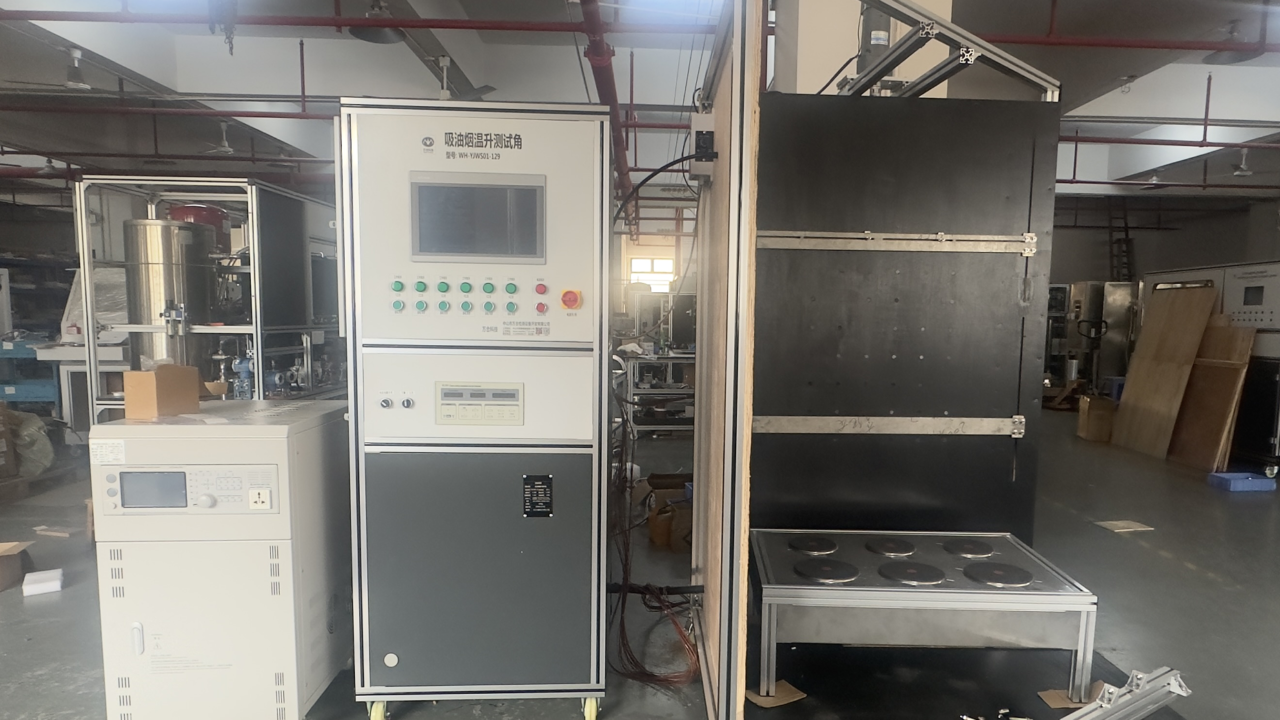
Range hood leader Vanward took both sides of range-hood validation from Wanhe: a WH-YJ01 airflow and energy test system quantifying suction performance, and a WH-YJWS01-129 temperature-rise corner proving safe surface and duct temperatures.
Range hood performance is judged on airflow rate, static pressure and energy use, while safety testing looks at temperature rise across surfaces and ducting. Our range hood test equipment covers both sides, and the delivered projects include an airflow energy system and a dedicated temperature-rise corner installed at Vanward (Wanhe Electric), one of China’s largest kitchen-appliance groups.
In this case study:
- Airflow and energy side
- The Vanward temperature-rise corner
- Equipment supplied
- Production vs lab
1. Airflow and energy side
The WH-YJ01-100A system measures range hood airflow and energy efficiency on a standardised test duct, and a larger WH-YJ01 stand is rated around the 50-50 m³/min range for higher-capacity hoods. Production-line versions are covered by the end-of-line range hood station. The airflow test duct is built to the standard box-and-duct arrangement used for hood performance rating, so readings are comparable across models.
2. The Vanward temperature-rise corner
Separately, a range-hood temperature-rise test corner (WH-YJWS01-129) was installed at Vanward. It provides the controlled fire/heat source and thermocouple layout used to measure surface and duct temperatures during safety assessment – the kind of corner rig a brand needs when it validates its own hoods in-house rather than sending every unit to a third party.
3. Equipment supplied (real models)
| Model | Function | Customer |
|---|---|---|
| WH-YJ01-100A | Range hood airflow and energy efficiency test system | Performance lab |
| WH-YJ01 | Airflow test system, ~50-50 m³/min range | High-capacity hoods |
| WH-YJWS01-129 | Range hood temperature-rise test corner | Vanward (Wanhe Electric) |
4. Production vs lab
The airflow energy system serves both R&D labs and production QC, while the temperature-rise corner is typically a laboratory / certification asset because it runs a real flame and requires the controlled corner setup. Vanward’s installation sits in its in-house validation room, supporting both model development and production acceptance.
Frequently Asked Questions
What does the range hood system measure?
It measures airflow rate and energy efficiency on a standardised test duct, with a higher-capacity version covering around 50-50 m³/min units.
Is temperature-rise testing included?
Yes – a dedicated range-hood temperature-rise test corner (WH-YJWS01-129) was installed at Vanward for surface and duct temperature safety checks.
Which named customer uses this equipment?
Vanward (Wanhe Electric), a major Chinese kitchen-appliance group, uses both the airflow system and the temperature-rise corner.
Can it sit on the production line?
Airflow stands are available in both lab and end-of-line configurations; the temperature-rise corner is normally a laboratory station.
Engineering and site integration
An airflow bench is built around a standardised test duct: the hood discharges into a smooth duct with a flow nozzle, pressure taps and a fan control section, so readings are comparable across hood models. Duct static pressure, air volume and input power are logged by the PLC during a set run-up to stable operation. The temperature-rise corner, by contrast, is a steel corner enclosure with the hood installed above a controlled gas heat source and thermocouples mapped to the surfaces and duct that must be measured. Because it burns a real flame, the corner sits in a ventilated lab with exhaust extraction and a gas emergency shut-off. On the Vanward installation we set the duct nozzles to the hood size, verify the thermocouple layout against the required test positions, train the lab engineers on the software, and leave a calibration record on file.
How a custom bench is specified
When a customer comes to us for a bench like the ones in this case study, the first working exchange is a short questionnaire rather than an instant price: we ask for the product drawings and range of models, the test clauses or standards the bench must satisfy, the required production beat or throughput, the local gas type and pressure, and the on-site utilities (compressed air, water supply and drain, power, exhaust). From that we issue a block diagram, a floor-layout sketch, a station list and a proposed acceptance checklist, then refine the fixture design together before fabrication begins. Every machine goes through a factory acceptance run with a sample part before shipment, and on-site commissioning is carried out with the customer’s engineers present. This front-loaded specification step is why retrofits – such as the Ferroli valve-circuit upgrade and the Geyou single/dual conversions – can reuse existing frames without surprises.
Looking for a similar configuration for your own product range? Wanhe Testing designs and builds custom gas-appliance test benches in Zhongshan, China, and has supported manufacturers, component suppliers and third-party test houses since 2011. Request a quotation or review our other testing-equipment case studies.