
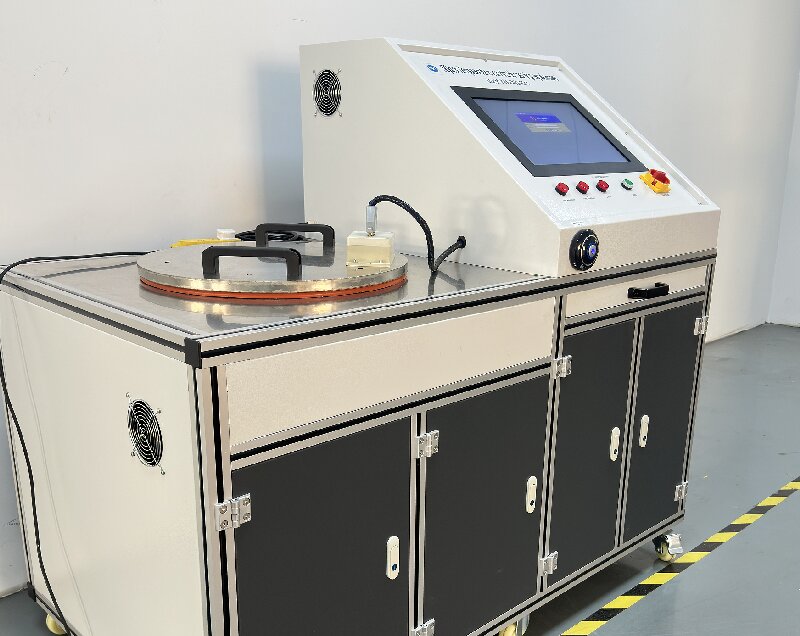
An integrated cooker (集成灶) combines a gas cooker and a range hood in one product — which means it needs two families of tests. This case study shows how one coordinated test platform covered both, with a shared test record per unit.
An integrated cooker is a different testing problem from a gas cooker or a range hood alone. It burns gas on the cooktop and moves air above it; it is subject to gas appliance requirements on one side and air performance expectations on the other. A factory making these products therefore faces a workflow question: test on two separate benches with two workflows and two records, or test on one coordinated platform that covers the complete product. This case study describes how we helped a Chinese integrated cooker factory choose the second path — a combined test solution built from the same core platforms we use for gas appliance benches and range hood test equipment.
1. The Situation: A Two-in-One Product with a Two-Bench Workflow
The factory produced integrated cookers for the domestic market and for export to markets where the combined product is increasingly common in apartment kitchens. Their quality control faced three practical problems.
First, the product has two testable halves. The gas cooktop section must be verified for gas tightness, ignition performance, flame characteristics, thermal efficiency and safety functions — the standard family of gas cooker checks. The range hood section must be verified for airflow, static pressure and noise — the standard family of air performance checks. Each half has its own methods, its own instruments and its own pass/fail logic.
Second, the workflow was split. Before the project, the factory tested the gas functions on a gas bench and the air performance on separate range hood equipment, in different areas. A single finished unit had to be moved between stations, booked into two test queues, and its results recorded in two places. The QC manager described the recurring question on the floor: “which bench do I test on first?” — a workflow inefficiency that every operator felt and nobody had a clean answer for.
Third, the buyer evidence was fragmented. Export buyers increasingly ask for a per-unit record covering the complete product — gas results and air results together, traceable to one serial number. Two separate records meant the factory had to reconcile evidence by hand, and any mismatch raised questions with buyers who were not in the factory to check.
The factory’s request was simple to state and harder to build: test the whole product on one coordinated solution, and record the whole product in one place.
2. The Requirement: A Combined Test Platform
We translated the request into a written specification before any design work — the same specification-first discipline we use on every project. The agreed requirement had five parts:
- Gas test items. Gas tightness, ignition performance, flame characteristics, thermal efficiency and safety function checks on the cooktop section, following the gas cooker test method family used across our gas appliance benches.
- Air performance test items. Airflow, static pressure and noise measurement on the range hood section, following range hood air performance test methods.
- One coordinated platform. Both test families on a single integrated solution, so one finished unit is tested without moving between stations.
- Shared data recording. Gas and air results logged together per unit serial number, in one data system the QC team can query by model and by date.
- Production-floor operability. The platform had to be run by regular QC operators with a standard test sequence — not by specialist engineers.
Every item, instrumentation class and utility in this list was stated in the quotation and agreed in writing before manufacturing started — nothing was left to assumption.
3. The Solution: Gas Bench Capability + Range Hood Air Performance, Integrated
We delivered a combined test solution that integrates the gas test bench functionality with range hood air performance test capability, drawing on two established product platforms: the gas cooker test bench series for the gas side, and our WH-YJ05-301A range hood test equipment for the air side. The engineering work was configuration and integration — applying proven platforms to a combined workflow rather than inventing a new machine from scratch.
On the gas side, the platform runs the core cooktop checks: gas tightness under test pressure, ignition performance across the burner system, flame characteristics and thermal efficiency, plus the safety function verifications the product requires. Instrumentation follows the same classes used across our gas appliance benches, so the results are comparable with the factory’s existing quality data.
On the air side, the platform measures the range hood’s airflow, static pressure and noise performance. The measurement approach and instrumentation build on the WH-YJ05-301A range hood test equipment, configured for the integrated product’s duct arrangement and rated airflow range.
The integration is where the value sits. The two test families share one control and data system: an operator runs a standard test sequence covering the complete product, and the platform records the gas results and the air results together against the unit’s serial number. No moving between stations, no two-queue booking, no manual reconciliation of two records.
The platform arrived with the full documentation set — technical specification, acceptance test report, calibration records and operation documentation — and commissioning was delivered by video with the factory’s engineers, following the same remote-commissioning process we use for export projects.
4. The Outcome: One Product, One Test, One Record
The factory’s QC workflow changed in three measurable ways:
- Test handling time dropped. The “which bench first” question disappeared. A finished unit goes through one standard sequence instead of two separate bookings, and the QC team no longer manages two queues.
- Per-unit records now cover the complete product. Gas and air results sit together in one data system, traceable by serial number. When a buyer asks for evidence on a specific unit, the factory can pull one complete record instead of reconciling two.
- The evidence matches what buyers request. The combined record is exactly the kind of per-unit evidence buyers of integrated cookers increasingly ask for — the factory can present complete product data without assembling it by hand.
For the factory, the project removed a recurring workflow cost and turned product testing from a two-step chore into a single defensible record. For their buyers, the change was invisible and valuable: the evidence they request now exists as a matter of routine.
5. Technical Notes: The Test Families on One Platform
The table below summarises how the two test families sit on the combined platform:
| Product section | Test family | Typical items | Platform basis |
|---|---|---|---|
| Gas cooktop | Gas appliance checks | Gas tightness, ignition performance, flame characteristics, thermal efficiency, safety functions | Gas cooker test bench series (12+ test item capability) |
| Range hood section | Air performance checks | Airflow, static pressure, noise | WH-YJ05-301A range hood test equipment |
| Whole product | Integrated data record | Gas + air results per unit serial number | Shared control and data system |
Three engineering points are worth noting for anyone planning a similar platform:
- Gas supply configuration matters. The gas side must be specified for the product’s gas family and the factory’s test gas availability — LPG/NG readiness is standard on our gas benches, and the supply configuration is stated in the quotation.
- Air measurement needs a defined duct condition. Airflow and static pressure results are only meaningful under a defined installation condition; the specification should state how the range hood section is mounted and ducted during testing.
- The data system is the integration point. The value of a combined platform is largely in the shared record — define how gas and air results are linked to the unit before the platform is built, not after.
5.1 Configuration Options Worth Discussing Before Quotation
A combined platform like this one is configured, not off-the-shelf — which is why the specification round matters. The options below are the ones buyers most often ask about:
- Gas supply. Single gas family or LPG/NG ready, with or without a gas mixing system for multiple gas families — decided by your test gas availability and your export markets.
- Duct configuration. A fixed duct simulator matched to your hood outlet, or adjustable ducting for several models with different outlet positions.
- Noise measurement approach. In-place measurement with defined background noise limits, or a quieter measurement arrangement where your standard requires lower ambient noise.
- Data integration. Local data logging with export to Excel, or connection to your ERP or quality management system so test records flow into existing workflows.
- Operator interface. Touchscreen sequence control for production-floor operators, or a PC-based system with full data analysis for laboratory use.
Each option affects price and lead time, which is exactly why it is stated in the quotation in writing. The specification round is where we lock these choices with you — before manufacturing starts, not after.
6. Why Combined Testing Matters for Your Project
If you make or buy integrated cookers, the same question applies at every level — factory QC, lab evaluation and buyer acceptance: is the product tested as one product or as two halves? Combined testing matters for three reasons:
- Buyer evidence. Per-unit records covering the complete product match what export buyers ask for and remove the reconciliation burden from your QC team.
- Workflow cost. One coordinated sequence costs less floor time than two separate test bookings, and eliminates the “which bench first” queue decision on the production floor.
- Quality visibility. With gas and air results in one data system, trends are visible per model — weak ignition and weak airflow can be correlated, not investigated separately.
The same platform logic extends to other combined products: any product that spans two test families — a gas appliance with an electrical or mechanical function, a product tested for both performance and environmental behaviour — can benefit from a coordinated solution instead of two disconnected benches.
7. Frequently Asked Questions
Can you build a combined gas + air performance platform for our integrated cooker model?
Yes — this case is exactly that build. Send us your model’s specifications, the standards you need to meet and your production volume; we return a written specification with test items, instrumentation class and the integration approach, typically within the 7–15 day design cycle.
Do we need separate rooms or utilities for gas and air testing?
Both test families have utility requirements (gas supply for the cooktop tests, defined ducting for the air tests), and these are specified in the quotation. The platform is designed so one operator can run the combined sequence in one area.
Can the platform test different integrated cooker models?
Yes. The gas side and the air side are configured for a range of models — burner arrangements and duct positions are handled through changeable test interfaces, and the data system records results per model and serial number.
What about noise testing — is it included?
Noise is part of the range hood air performance family and can be included in the platform. Whether it is a measured item or a monitoring item depends on your standard and is agreed in the specification.
Do you support installation and training for this kind of platform?
Yes — video-based commissioning and operator training are standard; our engineers guide your team through the combined sequence step by step. Larger or more complex installations can be arranged on site.
What is the delivery timeline for a combined solution like this?
The typical sequence applies: specification agreed in writing first (days 1–7), design phase about 7–15 days, manufacturing about 15–25 working days for standard configurations and 30–45 working days for custom ones, followed by export packing, shipment and video commissioning. Your quotation states its own dates in writing.
How do we verify the platform before it ships?
Every specification item is verified at our factory before shipment and documented in the acceptance test report, which travels with the machine. You can also arrange third-party inspection before shipment for independent confirmation.