
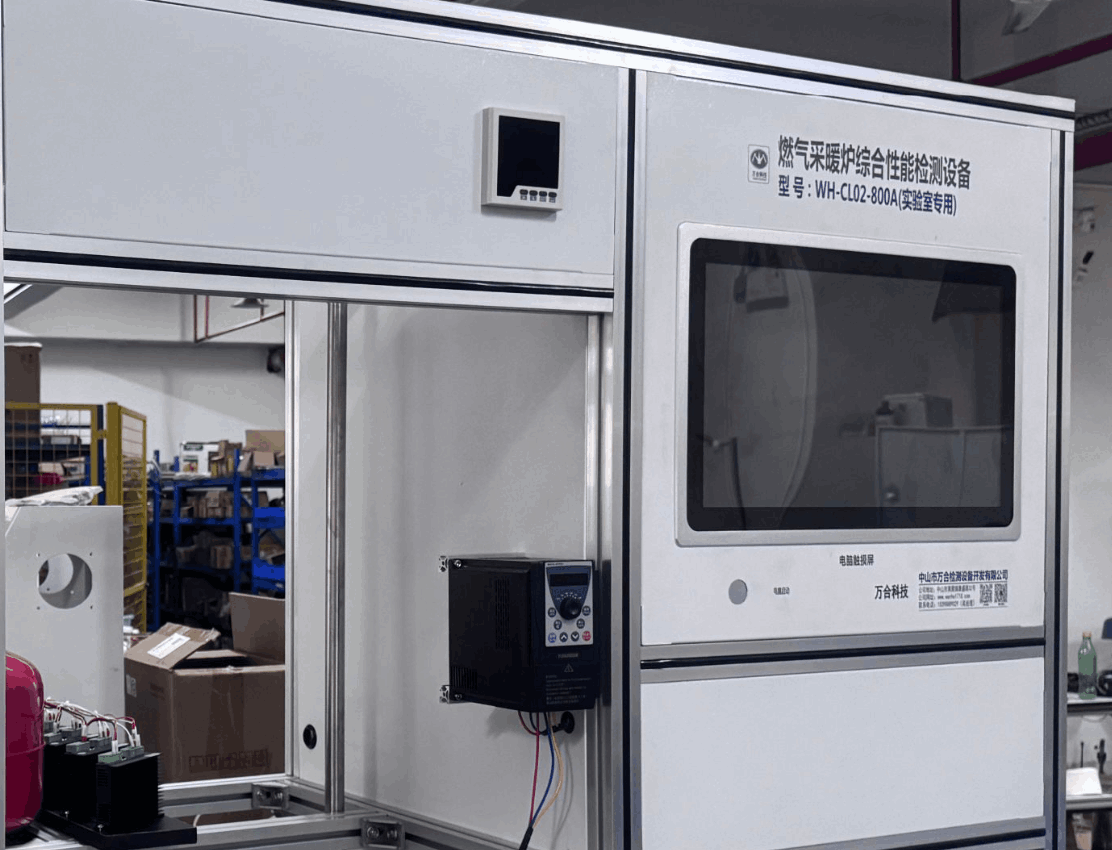
During the production‑line upgrade of integrated stoves, the implementation of the multi‑station testing solution directly determines the stability of factory‑out quality. Over the past few years, the team has been advancing the construction and commissioning of this system in the workshop. Each integrated stove requires simultaneous verification of five core links: ignition response, heat‑load distribution, flue‑gas composition, wind‑pressure balance and safety flame‑out protection. Integrating originally scattered stand‑alone inspections onto a single assembly line puts the synergy of sensor layout, gas‑circuit distribution and data acquisition to the test.
In actual wiring, high‑precision pressure transmitters and thermocouple arrays are fixed at designated positions on the test bench. The system records the initial pressure within 0.3 seconds the moment the gas valve opens, before entering the steady‑state combustion phase. The core of the multi‑station design lies in equal‑pressure control by the gas‑source distributor. Through coordinated adjustment of pressure‑reducing valves and buffer tanks, gas‑supply fluctuations for each station are kept within 2 %. For wind‑pressure testing, variable‑frequency fans are used together with differential‑pressure gauges to simulate smoke‑exhaust resistance on different floors, with data uploaded to the central processing unit in real time. Ignition success rates are compared synchronously against thermocouple response times; units exceeding preset thresholds are automatically routed for re‑inspection.
The workflow was built referencing the testing framework of the national safety standard for gas appliances GB 16410, with parameter calibration performed in accordance with acceptance specifications from third‑party testing institutions. More than 12 000 test records were accumulated over three consecutive months of trial production. The average duration of one full test cycle was reduced to 45 seconds, and the accuracy of data traceability remained above 99.7 %. Repeatability deviation of the test bench was controlled within 0.3 %, fully meeting metrological‑calibration requirements. After production tact time was improved, the operational workload of quality‑inspection personnel dropped significantly, and the on‑site environment remained neat and orderly.
Routine equipment maintenance focuses on gas‑circuit tightness checks and sensor zero‑point calibration. Calibration is carried out weekly using standard gas; solenoid‑valve actuation counts are tallied monthly, and wearing parts are replaced on schedule. The data platform supports batch export of inspection reports to facilitate after‑sales traceability and process optimization. Test modules are subject to continuous iteration, and combustion‑curve trend‑analysis functions have been added to the control logic to further shorten fault‑diagnosis time. Production‑line staff reported that multi‑station testing has shifted quality control from passive interception to active prevention, enabling a more stable product delivery rhythm.
This solution has been deployed at multiple manufacturing bases, with test data directly interfaced to the enterprise quality‑management system. Engineering teams regularly collect on‑site operating parameters to optimize control strategies. As gas‑appliance manufacturing moves toward refinement, the mature multi‑station test platform provides solid support for product reliability while reserving interface capacity for future intelligent upgrades.